Reviewing November-Wild Flower for Embroidery Projects
When I sit down to evaluate a new digital asset for my studio, I am rarely looking at just a pretty picture. I am looking at stitchability, market viability, and the emotional resonance of the final product. Today, I am putting November-wild flower under the microscope. This is not just another clipart file; it is a design asset that claims to bridge the gap between rustic charm and modern craft aesthetics. As an experienced designer who frequently produces custom apparel, boutique merchandise, and personalized gifts, I need to know if this design holds up when transferred from screen to fabric.
The premise is simple: you get an instant download containing SVG, PNG, DXF, PDF, and EPS files in high resolution. While these formats are standard for the crafts and graphics categories, the real test lies in how the visual personality of November-wild flower translates into a tangible embroidery project. Does it feel like a cohesive piece of art, or does it look like a collection of disparate elements forced together? Let’s dive into the practical realities of using this design.
First Impressions and Visual Mood
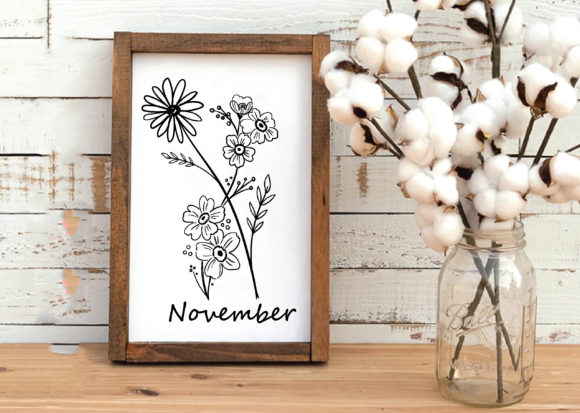
The name itself suggests a specific seasonal mood—late autumn, crisp air, and the rugged beauty of flora that survives the cooling temperatures. When I first opened the vector layers, what struck me was the organic flow of the composition. It avoids the stiff, geometric rigidity that plagues many generic machine embroidery design files. Instead, it leans into a more naturalistic, perhaps slightly wild, aesthetic.
This visual personality is crucial for handmade product creators. In a market saturated with perfectly symmetrical floral bouquets, a design that feels "wild" stands out. It suggests authenticity. For a small shop product aimed at customers who value artisanal quality, this design offers a narrative hook. It isn't just a flower; it's a piece of nature captured in thread. The layout appears balanced enough to serve as a focal point on a garment without overwhelming the wearer, yet detailed enough to justify a premium price point.
Real-World Application: The Tote Bag Scenario
To truly judge an embroidery file, I always simulate a real-world use case. Imagine you are preparing a batch of custom embroidered tote bags for an upcoming holiday pop-up or Etsy listing. You want something that feels cozy but durable, suitable for carrying books, groceries, or gifts.
I placed November-wild flower on a canvas tote mockup. The contrast potential here is excellent. If stitched in earthy tones—mustard yellows, deep burgundies, and olive greens—the design would pop beautifully against a neutral beige or cream bag. However, if you opt for a darker canvas, the detail might get lost unless you adjust your thread colors carefully. This is where the versatility of the included formats comes into play. Having the PNG allows for quick previewing on various background colors before committing to expensive stabilizer and thread tests.
The design also works surprisingly well for apron embroidery. A kitchen towel or a heavy-duty apron benefits from a central motif that doesn't require excessive hoop movement. If November-wild flower fits within a standard 4x4 or 5x7 hoop comfortably, it becomes a low-friction production item. For an Etsy seller, speed and consistency are key. A design that stitches cleanly in one hooping session reduces labor costs and increases profit margins.
Performance on Different Fabrics and Garments
Not all fabrics treat design assets equally. Here is how I anticipate November-wild flower will perform across different mediums:
- Sweatshirt Embroidery: This is a prime candidate for fall/winter collections. On a fleece or cotton-blend hoodie, the texture of the fabric can complement the "wild" theme. However, ensure the stitch density is appropriate. Too dense, and the sweatshirt becomes stiff and uncomfortable; too sparse, and the backing shows through. Given the likely intricate lines of a wildflower motif, a cut-away stabilizer is non-negotiable here to prevent puckering.
- Baby Embroidery: Soft bodysuits or muslin blankets are popular gift items. The gentle curves of the flowers could work well here, provided the smallest details are large enough to be stitched clearly on soft, thin fabric. Tiny, fragile threads might snag easily on baby clothes, so inspecting the fine lines in the DXF or SVG is critical.
- Caps and Hats: Curved surfaces present a challenge. If the design has sharp corners or extreme width, it may distort when pulled over the curve of a baseball cap. I would recommend testing this on a curved surface mockup first. If the design is compact, it can make for a sophisticated embroidered patch style application on the front panel.
- Pillow Covers and Home Decor: For nursery decor or living room accents, this design adds warmth. Linen or cotton blends hold embroidery beautifully. The high-resolution EPS file ensures that if you ever need to scale this up for a large throw pillow, the edges remain crisp.
Where to Use Caution
While November-wild flower has strong appeal, there are scenarios where it requires careful handling. Avoid placing intricate versions of this design on highly textured fabrics like chenille or thick terry cloth, as the needle penetration may be inconsistent, leading to skipped stitches. Similarly, stretchy knits require extra attention to stabilizer choice; a tear-away might not provide enough support for the weight of the thread.
Also, consider the end-user. If this is intended for frequent washing, such as workwear or kids' clothing, ensure the design does not rely on overly delicate satin stitches that might fray over time. A combination of satin stitch for outlines and fill stitch for larger areas tends to be more durable than relying solely on running stitch for definition.
Impact on Brand and Customer Trust
In the world of commercial embroidery, presentation is everything. A clean, well-executed design signals professionalism. When a customer sees November-wild flower stitched neatly on a finished product, it elevates the perceived value of the item. It moves the product from "cheap souvenir" to "thoughtful gift."
For custom apparel businesses, offering designs with seasonal relevance like "November" helps with timely marketing. It taps into the consumer's desire for comfort and nostalgia during the colder months. By providing high-quality digital files alongside physical products, you cater to both the DIY crowd and those who buy ready-made goods, expanding your total addressable market.
Practical Designer Notes for Implementation
Before you upload November-wild flower to your machine or send it to production, follow these steps to ensure success:
- Test on Scrap Fabric: Never assume a design will stitch perfectly on your final material. Run a test on a scrap piece of the exact fabric you plan to use. Check for tension issues and thread breaks.
- Check Stitch Density: Zoom in on the digital file. Are there areas where stitches overlap excessively? If so, you may need to digitize-edit the file to reduce density or add water-soluble topping to prevent shading.
- Verify Hoop Size: Confirm that the design dimensions fit your intended hoop size. If the design is borderline, consider rotating it or scaling it down slightly to avoid edge stitching errors.
- Inspect Small Details: Look closely at the smallest petals or leaves. If they are thinner than 0.5mm, they may not stitch reliably on most home machines. You might need to thicken these lines in the SVG editor before converting to embroidery format.
- Black and White Mockups: Convert the design to grayscale to check contrast. Sometimes colors look good on screen but fail to distinguish themselves when stitched in monochrome or similar thread shades.
- Confirm Licensing: Since this is sold as a digital download, verify the license terms. Can you sell unlimited finished products? Is there a cap on the number of units? Clear licensing protects your craft business from legal issues.
Ultimately, November-wild flower appears to be a versatile and aesthetically pleasing addition to any designer's library. Its strength lies in its organic feel and adaptability across various personalized gift categories. By paying attention to fabric choice, stabilizer usage, and stitch quality, you can transform this digital graphic into a cherished physical object. Whether you are creating a single unique piece for a friend or mass-producing inventory for your online store, this design offers the balance of beauty and functionality that today's consumers expect.